
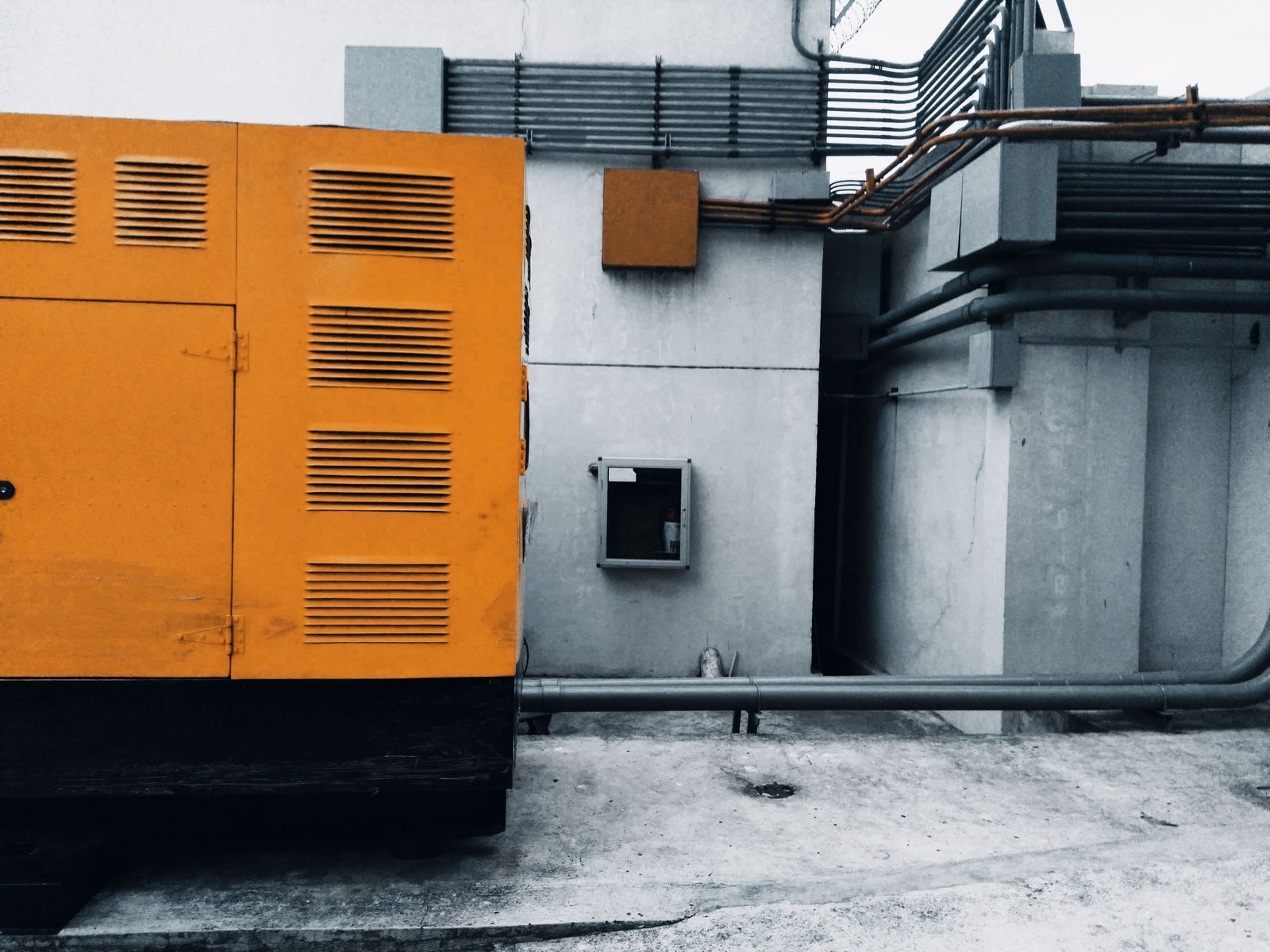
Standby & prime powerExpert DPF Cleaning
Industrial Generator DPF Cleaning: Why Standby Power Fails When You Need It Most
Industrial generator DPF cleaning is the maintenance job nobody plans for until the lights go out. This guide explains why standby gensets block their filters, the warning signs to watch and how professional cleaning restores full power.
Nobody thinks about the generator until the lights go out. That’s exactly the problem.
Why generator duty cycles choke filters, how wet stacking makes it worse, the six warning signs, and what proper industrial generator DPF cleaning involves, step by step.
A standby generator is the one piece of equipment on site that’s expected to do nothing for months and then perform flawlessly, on demand, with no warning. It’s supposed to start on the first attempt, pick up the load smoothly and hold it for as long as the outage lasts. For hospitals, data centres, cold storage, manufacturing plants and construction sites, that expectation isn’t optional. It’s the whole reason the machine exists.
And yet one of the most common reasons modern diesel generators underperform has nothing to do with the alternator, the fuel system or the battery. It’s a blocked diesel particulate filter sitting quietly in the exhaust, loaded with soot and ash that nobody has looked at since the last service.
This guide explains why generators are so prone to DPF problems, what the warning signs look like, and what proper professional cleaning actually involves, so facilities managers, site engineers and plant operators can get ahead of the problem instead of discovering it mid-outage.
Why Generators Are a Perfect Storm for DPF Problems
A DPF works well when an engine runs hot, under steady load, for long enough to burn the trapped soot away. That process is called regeneration. A truck on a long motorway run gets this almost for free. A generator, in most real-world applications, gets the opposite.
Here’s what generator duty cycles typically look like:

 IDLE / TEST
A standby unit might be exercised for twenty or thirty minutes a week, usually with little or no load connected. That’s enough to start the engine and prove it works, but nowhere near enough to get exhaust temperatures high enough for the filter to clean itself.
 LIGHT LOAD
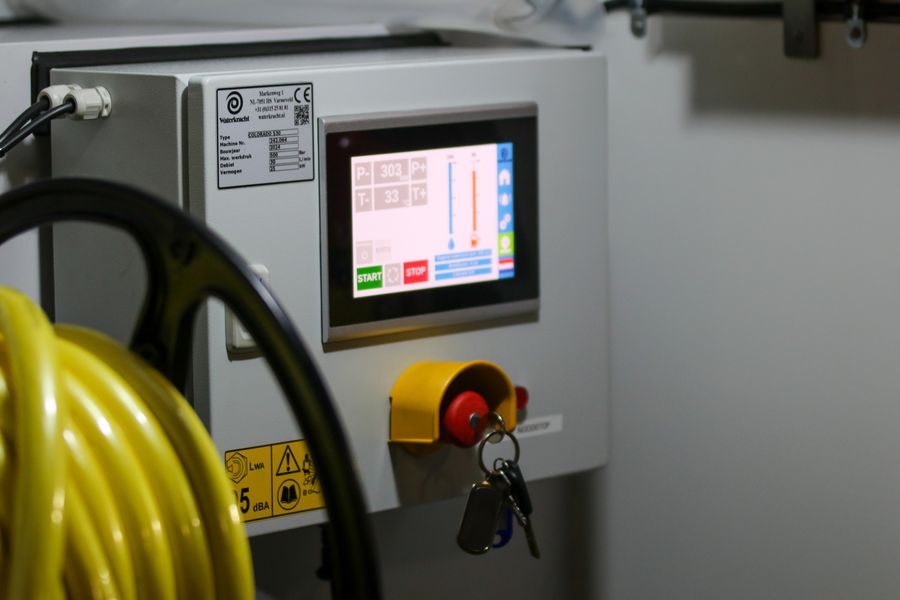
Generators are often sized for worst-case demand, which means in everyday use they run well below their rated capacity. Engines running at low load produce cooler exhaust and more unburnt fuel, and both of those feed soot straight into the filter.
 COLD START
Every cold start produces a burst of incomplete combustion. Spread that across years of weekly tests and the soot adds up faster than most people expect.
 UNATTENDED
Prime-power and rental units on remote sites can run for days without anyone looking at them, so a developing problem goes unnoticed until performance drops or a fault code stops the unit.
 HARSH SITE
Construction, quarrying, agriculture and mining sites throw dust, vibration and temperature swings at equipment, all of which make everything harder on the exhaust after-treatment system.
None of this means the generator is badly maintained. It’s simply that the way generators are used and the way DPFs need to be used are fundamentally at odds, and the filter pays the price. That conflict is why industrial generator DPF cleaning belongs in the service plan, not the emergency list.
Wet Stacking: The Problem Behind the Problem
Anyone who has worked around diesel generators will have heard the term wet stacking. It describes what happens when an engine runs lightly loaded for long periods: combustion temperatures stay low, fuel doesn’t burn completely, and unburnt fuel and oily residue collect in the exhaust system, leaving a sticky, black film behind.

The result is a filter that’s more heavily loaded than the hour count on the engine would suggest, and one that’s often contaminated with more than just dry soot. That contamination is exactly why light-duty fixes such as running the generator on load for a while or adding a fuel additive often fall short on a generator DPF that has been neglected for a long time. A diesel generator particulate filter in that state needs industrial generator DPF cleaning, not another test run.
The Warning Signs Facilities Teams Should Watch For
A generator rarely fails dramatically because of its DPF. It degrades quietly, and the clues are usually visible well before the unit trips out. If you suspect a standby generator DPF is blocked, keep an eye out for these six alarms. Tap a window to acknowledge it.
- Rising exhaust back pressure. If your unit reports exhaust pressure or has a differential pressure reading across the filter, a steady upward trend is one of the clearest early warnings.
- Reduced power output or poor load acceptance. The generator starts fine but struggles to pick up load, hunts under changing demand or can’t reach full rated output.
- Higher fuel consumption for the same load. A restricted exhaust makes the engine work harder, and it shows up on the fuel log before it shows up anywhere else.
- Frequent regeneration attempts. Units that are constantly trying to regenerate are telling you the filter is struggling to clear itself.
- Warning lights, derate modes or fault codes. Many modern gensets will reduce output to protect the engine once the filter reaches a set loading threshold. That derate may only appear under real load, which means a unit can pass a no-load weekly test and still fail when it’s really needed.
- Unusual exhaust smell, smoke or heat around the exhaust area. A heavily loaded filter can run hotter than it should during a regeneration attempt.
Starts first time, runs smoothly, nothing to report.
The blocked filter finally shows its hand.
The key point for standby applications is the third-to-last one. A generator that passes its weekly test run can still be sitting on a blocked DPF that only shows its hand when it’s asked to carry a real load. That’s why periodic inspection and load testing matter as much as the routine start-up test. Spotting these signs early keeps industrial generator DPF cleaning a planned job rather than an emergency.
Why Blocked Generator DPFs Are More Disruptive Than Truck DPFs
When a delivery van loses power because of a blocked filter, you lose a delivery. When a generator loses power because of a blocked filter, the consequences depend entirely on what that generator was protecting. That is why industrial generator DPF cleaning matters far more than the same job on a van.
 SAFETY
Backup power is part of day-to-day safety planning, and a unit that can’t reach full output is a risk no matter how good the rest of the plan is.
 SECONDS
Seconds matter, and a generator that trips on a fault during a transfer can mean a lot more than an inconvenience.
 STOCK
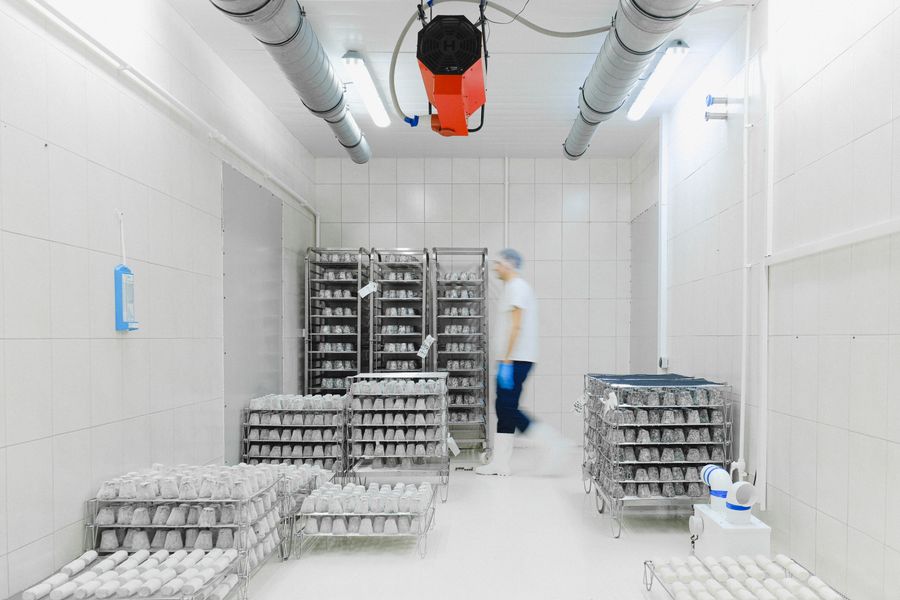
Temperature-sensitive stock is exposed the moment backup power becomes unreliable.
 LINE STOP
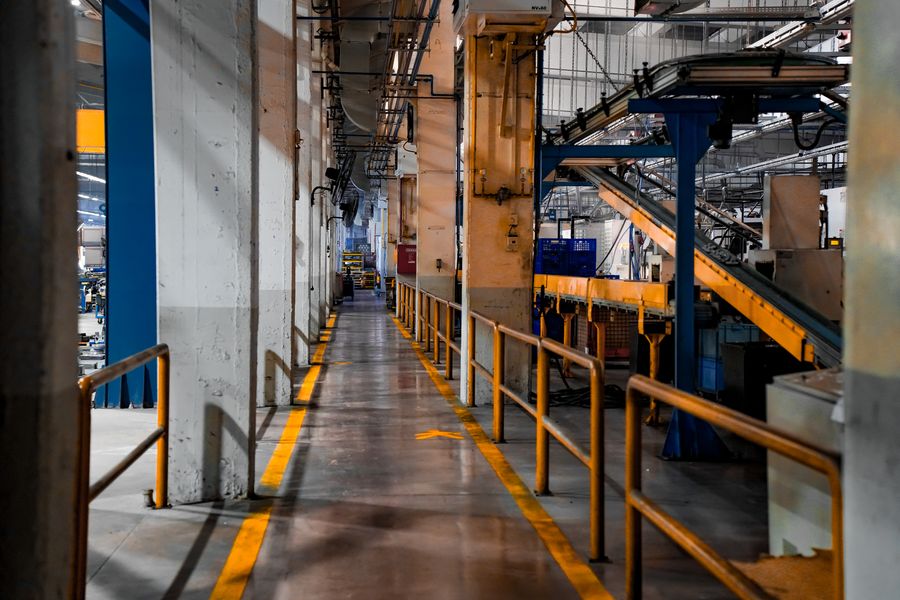
An unplanned shutdown during a production run can waste materials and idle an entire line.
 WORK STOPS
Temporary power on site is often the only power on site, so a derated or failed unit stops work for everyone who depends on it.
 REPUTATION
A generator returned from hire in poor condition, or one that fails on a customer’s site, puts a business relationship at risk, not just a machine.
In every case, the pattern is the same: the DPF problem developed slowly and out of sight, then showed up all at once at the worst possible moment.
Soot, Ash and Why Regeneration Isn’t Enough
It helps to understand the two different things that clog a DPF, because they need different solutions.
Soot is the carbon-rich by-product of incomplete combustion. In the right conditions, soot can be burned off during regeneration. That’s what the system is designed to do.
Ash is what’s left behind after regeneration burns the soot away. It comes from lubricating oil additives and trace metals, and it doesn’t burn. Over time it accumulates inside the honeycomb channels, shrinking the space available for exhaust gas to flow and shortening the interval between regenerations.
For a generator, both problems stack up in unhelpful ways. Light loading drives up soot production and makes regeneration less effective, so the filter spends more of its life partly loaded. Meanwhile, ash keeps building with every hour of running, no matter how the unit is used.
Eventually the filter reaches a point where it can’t be restored by driving harder, loading the unit or running a forced regeneration. It has to be cleaned physically, and that’s where professional industrial generator DPF cleaning comes in.
What Professional Industrial Generator DPF Cleaning Looks Like
A proper industrial DPF cleaning service is a controlled, step-by-step process, not a quick rinse. When it’s done well, it generally covers the following:

- Inspection and diagnostic assessmentPENDING
Before anything is cleaned, the filter is checked for its actual condition: how loaded it is, what type of contamination is present and whether there’s structural damage such as cracking or melting that would make cleaning pointless.
- Thermal treatmentPENDING
Controlled heating breaks down baked-in carbon and oily residue, the sort of stubborn deposits that wet stacking leaves behind and that no amount of regular running will shift.
- Ultrasonic or pneumatic cleaningPENDING
Once the hardened deposits have been loosened, the honeycomb channels are cleared physically, removing soot and ash that would otherwise stay trapped.
- Flow testingPENDING
The cleaned filter is tested to confirm that exhaust flow has been restored to where it should be. This step separates a genuine restoration from a surface clean and is the part most worth asking any provider about.
- Careful handling and returnPENDING
Industrial filters can be large, heavy and fragile. They need proper packaging and handling so a cleaned unit arrives back in the condition it left the workshop.
The aim is straightforward: restore the filter’s flow and give the generator back the exhaust performance it was designed to have, without replacing a component that was never faulty. It simply needed clearing out.
Why Postal DPF Cleaning Suits Generators So Well
Generators have an awkward relationship with traditional workshop servicing. They’re heavy, often fixed in place, sometimes housed in plant rooms, containers or remote compounds, and rarely easy to move. Taking the whole machine somewhere to have its filter cleaned is usually impractical.
That’s exactly why removing the filter and sending it for professional cleaning has become the sensible route for so many generator owners and service engineers. Postal DPF cleaning for generators works like this:
- 1Removed on siteThe DPF is removed on site by your engineer or maintenance team.Your site
- 2In transitIt’s packaged securely and sent by courier to the cleaning facility.Courier collection
- 3Assessed, cleaned, flow testedIt’s assessed, cleaned and flow tested on arrival.Expert DPF Cleaning workshop
- 4Delivered, ready to refitIt’s shipped back, ready to be refitted.Back to your site
There’s no crane, no transporter and no disruption to the site beyond the short time the filter is out of the exhaust. For planned maintenance windows, it fits neatly into the normal service routine.
- Works the same for the next building or the other end of the country
- Ideal for facilities managing several sites
- A good fit for hire companies and plant fleets

For facilities managing several sites, the same process works identically whether the generator is in the next building or the other end of the country. It’s also a good fit for hire companies and plant fleets, where several units need attention at once and where the downtime of each machine directly affects revenue. That is why generator DPF cleaning UK teams rely on is so often done by post.
Building DPF Care Into Your Generator Maintenance Plan
The facilities teams who rarely have DPF problems are the ones who treat the filter as part of the generator service plan rather than a surprise. A few habits make a real difference. Tick the ones already in your plan:
Start with load testing. It is the habit that tells you the most.
Build these habits in and industrial generator DPF cleaning becomes a planned, budgeted job rather than an emergency call-out.
What to Ask Before Choosing a Cleaning Provider
Generator filters differ widely in size, construction and mounting, so it pays to check a few things before sending a unit anywhere:

How We Handle Every Industrial Unit
At Expert DPF Cleaning, this is how we handle every industrial unit that comes through the door. Whether it’s a standby genset from a plant room, a rental generator returned from site or a unit that has been quietly struggling for months, it’s assessed on arrival, cleaned using thermal and ultrasonic methods suited to its size and condition, flow tested and returned to you ready to fit.
That is industrial generator DPF cleaning done properly: diagnosed first, verified after.
The Bottom Line
A generator is only as good as its weakest link when the power fails, and for a surprising number of modern diesel units, that weak link is a filter nobody has checked in years. Light loading, frequent cold starts, long idle periods and the build-up of ash all conspire to choke the DPF slowly and silently, and the symptoms often don’t appear until the generator is asked to do real work.
The good news is that it’s one of the most manageable problems in standby power. Spot the early signs, build filter inspection into your service plan, and have a proven route for getting the filter professionally cleaned when it needs it.

Do that, and your generator will be there when the power isn’t.
Is Your Generator’s DPF Due for Attention?
If you manage standby, prime or hire generators and want to be sure they’ll perform when it counts, a professionally cleaned DPF is one of the simplest ways to restore lost performance without replacing a component that doesn’t need replacing.
Expert DPF Cleaning provides industrial generator DPF cleaning for filters sent in from across the UK, with proper diagnostics before cleaning and flow verification after, so you know the job is done before the filter goes back on.
Frequently Asked Questions
Q-01Do industrial generators really have DPFs that need cleaning?
Many modern diesel generators do, particularly newer units fitted with exhaust after-treatment. Like any DPF, the filter collects soot and ash over time, and because generators often run lightly loaded, they can need cleaning sooner than their running hours might suggest.
Q-02Why does a standby generator get a blocked DPF if it barely runs?
Short, lightly loaded test runs and frequent cold starts produce plenty of soot but rarely reach the exhaust temperatures needed for the filter to regenerate. Over months and years, the soot and residue build up even though the engine hours stay low.
Q-03What is wet stacking, and how does it affect the DPF?
Wet stacking happens when a diesel engine runs at low load for long periods, leaving unburnt fuel and oily residue in the exhaust. In a generator with a DPF, that residue is caught by the filter, where it combines with soot and forms hard deposits that normal regeneration can struggle to remove.
Q-04Can a generator DPF be cleaned instead of replaced?
In most cases where the filter’s internal structure is intact, yes. Professional thermal and ultrasonic cleaning removes baked-in soot, ash and residue and restores flow, so a replacement isn’t usually the first step.
Q-05How do I know if my generator’s DPF is blocked?
Common signs include rising exhaust back pressure, reduced power or poor load acceptance, higher fuel consumption for the same load, frequent regeneration attempts and warning lights or derate modes. Because some problems only show under real load, a unit can pass a no-load test and still have a restricted filter.
Q-06Can you clean a generator DPF without moving the whole generator?
Yes. Only the filter needs to travel. It’s removed on site, sent to a specialist for cleaning and flow testing, then returned and refitted, so the generator itself stays exactly where it is.
Q-07How long does postal DPF cleaning take for an industrial unit?
Turnaround varies with the size and condition of the filter, but most of the time is courier transit in each direction plus the cleaning and testing itself. It’s worth planning the removal and refit around a scheduled maintenance window.
Q-08Do you clean DPFs from hire and rental generators?
Yes. Generators returned from hire often have filters loaded by varied, lightly loaded use, and professional cleaning is a practical way to get them back into service without lengthy downtime.
Q-09Will cleaning improve my generator’s performance?
If the loss in performance is caused by a restricted filter, cleaning restores exhaust flow and typically brings back power output, load response and fuel efficiency. If symptoms persist afterwards, it points to another fault that should be diagnosed separately.