
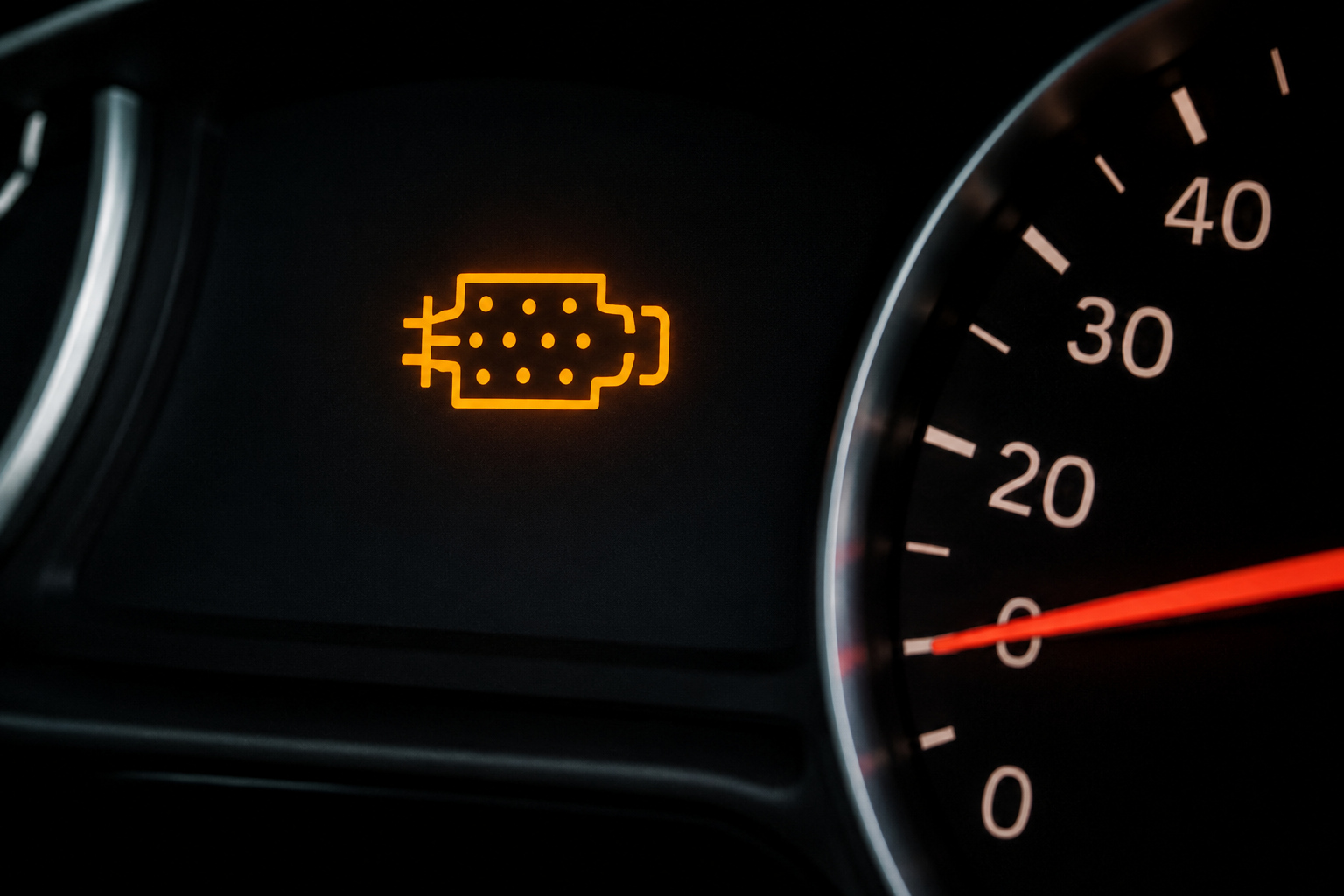
It happens to the best of us. You’re pulling out of a car park, glancing at the dash out of habit, and there it is — a little orange light you’ve never seen before. A quick Google tells you it’s the DPF warning. Another five minutes of reading and you’re convinced you’re about to spend a fortune on a new filter.
Stop. Breathe. Make a brew.
That warning light is your car asking for help — not handing you a bill. In most cases, a professional DPF clean will sort it completely. But there’s quite a bit of bad information out there about what causes DPF problems, what fixes them, and what happens if you ignore them. Let’s set the record straight.
What actually is a DPF — and why does it block?
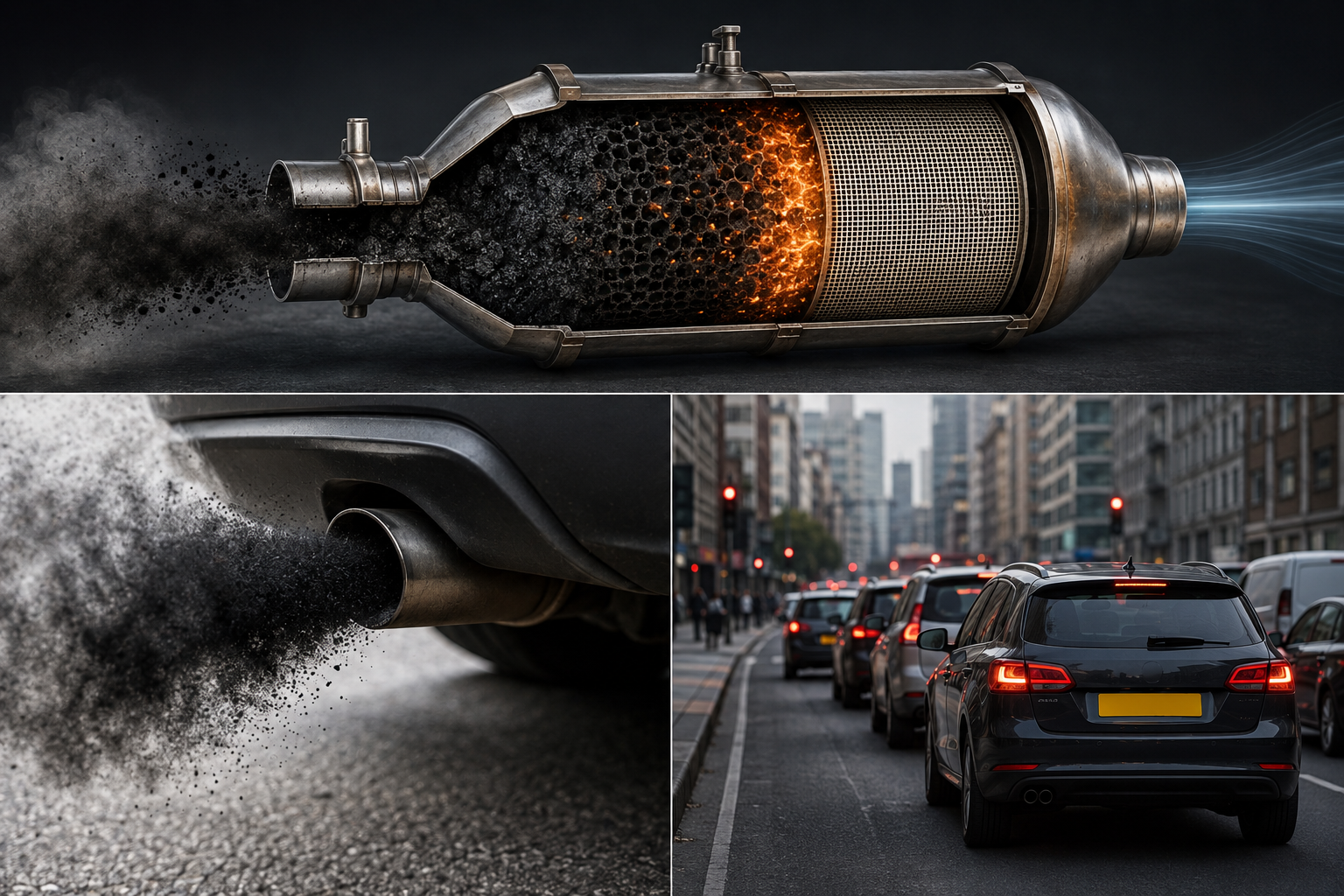
The Diesel Particulate Filter sits in your exhaust system and catches the soot produced when your engine burns diesel. It’s been fitted to virtually all diesel cars sold in the UK since 2009, and it does a genuinely important job — without it, modern diesels would be far dirtier than they are.
The problem is that DPFs are designed to clean themselves — a process called regeneration — but this only works properly when the engine gets hot enough for long enough. That means a decent motorway run or a long A-road journey at a consistent speed.
Why city driving causes most DPF problems
If your driving is mostly short hops — school run, nipping to the shops, sitting in city traffic — the DPF never reaches the temperature it needs to burn off the soot. Over time, the soot builds up. Then you get the light.
It’s worth saying: this isn’t a design flaw in your car. It’s a mismatch between what the engine needs and how a lot of people actually use it. Modern city life and diesel technology were never the best pairing.
Warning signs your DPF is blocked
Don’t wait for the warning light to go from steady to flashing. These are the signs your DPF is struggling:
- The DPF warning light appears on the dashboard — steady orange to start with
- Limp Mode — your car suddenly loses power and caps its speed, usually around 30–40mph. This is the engine protecting itself from further damage caused by the blocked filter. It’s your car’s way of saying enough
- Noticeably higher fuel consumption with no other explanation
- Sluggish acceleration that wasn’t there before
- The engine warning light appears alongside the DPF light
- A faint burning smell from the exhaust, particularly when stationary
About Limp Mode
If your car is in Limp Mode and you’re not sure why — a blocked DPF is the first thing to check. It’s one of the most common triggers in diesel vehicles. Don’t attempt a motorway run to clear it in this state — get it diagnosed properly first.
City driving vs. motorway miles — why it matters so much
Here’s something a lot of drivers don’t realise: two diesel cars of exactly the same model can have completely different DPF stories depending purely on how they’re driven.
- A car doing 30,000 motorway miles a year will likely never see a DPF warning light — the filter regenerates naturally, constantly, without the driver ever knowing it’s happening
- A car doing 8,000 miles a year entirely around town can have a severely blocked DPF within two to three years — even if it’s serviced on time and otherwise well looked after
- Cold, short journeys are the worst possible condition for a DPF. The engine barely warms up, combustion is inefficient, and soot production is high — with zero opportunity for the filter to clear itself
If this sounds like your driving pattern, you’re not alone. It’s one of the most common reasons we see cars come in, and it’s entirely fixable.
The real cost: DPF cleaning vs. replacement
This is where things get interesting. When you take a car to a main dealer or a garage that doesn’t specialise in DPFs, replacement is often the first thing suggested. It’s the easiest option for them — and the most expensive one for you.
| Option | Cost | Verdict |
|---|---|---|
| Professional DPF clean | Contact us for a quote | Best first option in most cases ✓ |
| Aftermarket DPF replacement | Significantly more expensive | Only if the filter is physically damaged |
| OEM dealer replacement | Most expensive option | Rarely necessary unless structurally failed |
| Ignoring it entirely | Turbo + engine damage | False economy — don’t do this |
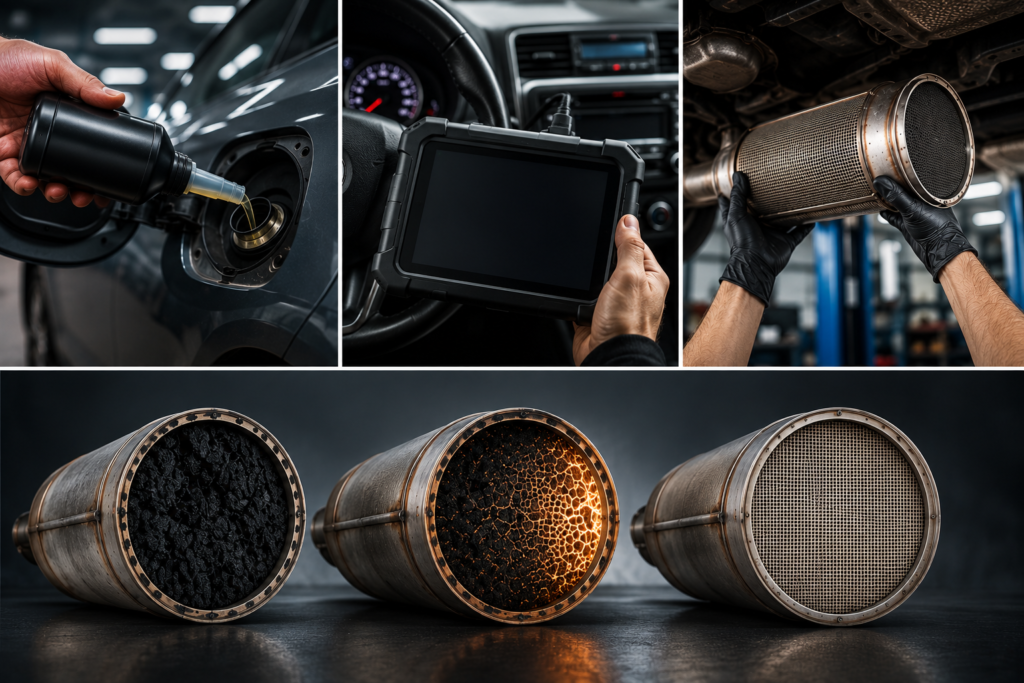
A professional clean — where the filter is removed, cleaned with specialist equipment, flow-tested, and refitted — will restore a blocked DPF to near-original performance in the vast majority of cases. The filter doesn’t wear out, it just gets clogged.
✓ When is replacement actually necessary?
The only time replacement makes more sense than cleaning is when the filter substrate itself is cracked or physically broken — something a proper inspection will pick up before any money changes hands. A reputable specialist will tell you which camp you’re in before starting work.
One more thing worth knowing: the backpressure created by a severely blocked DPF can push oil past your turbocharger seals. If you’ve been running with the light on for months, the DPF cleaning bill may not be the only problem. This is why early action pays off — every time.

What about DPF additives and ‘forced regen’ options?
You’ll find plenty of DPF additives, cleaning fluids, and forced regeneration services advertised online and at fast-fit centres. Some have their place — but it depends on how blocked your filter actually is.
Additives (fuel-based cleaners):Can help with mildly sooty filters, but won’t shift a DPF that’s already heavily blocked with ash. Ash doesn’t burn off — it has to be physically removed.
Forced regeneration:A garage plugs in a diagnostic tool and runs a high-temperature cycle. Works on partially blocked DPFs, but does nothing for ash content and won’t work beyond a certain blockage level.
Professional removal and clean:The only method that physically removes both soot and ash deposits. The filter comes off the car, gets cleaned with specialist equipment, flow-tested, and goes back on. This is what actually fixes a properly blocked DPF.
If a garage quotes a suspiciously low price for a DPF clean without mentioning filter removal, ask what that actually involves. Chances are it’s a forced regen or an additive — which might buy you a few weeks, but won’t solve the underlying problem.
Yes — and it's been that way since February 2014. MOT testers check for a DPF warning light as part of the emissions inspection, and a car showing a DPF fault will fail. Even worse, if a tester can see evidence that a DPF has been removed or tampered with, that's also an automatic failure. If your DPF light is on and your MOT is coming up, get it cleaned before you book the test — not after.
Sometimes — but it depends entirely on how blocked the filter is. If the light has only just come on and the blockage is mild, a 30–40 minute motorway run at steady speed (above 50mph, in a lower gear to keep the revs up) can trigger a passive regeneration and clear it.
But if the light has been on for a while, if it's flashing rather than steady, or if your car has already gone into Limp Mode — the blockage is likely beyond what a motorway run will fix. At that point you need a proper clean. Driving harder won't help and could make things considerably worse.
In the vast majority of cases, a professional clean is absolutely worth it. The filter itself doesn't degrade with use — it just gets blocked with soot and ash that can be removed. Unless the substrate is cracked or the filter has been damaged by excessive heat or an engine problem, cleaning will restore it to the same condition as a replacement unit.
The only scenario where replacement wins is when physical damage is confirmed — and a good specialist will check for that before recommending anything.
Pricing varies depending on your vehicle type, the severity of the blockage, and what else the diagnostic scan turns up. We don't publish fixed prices because every vehicle is different — the best thing to do is get in touch for a quote specific to your car, van, or truck. What we can say is that a proper removal-and-clean is significantly less than an aftermarket replacement, and a fraction of what an OEM unit from a main dealer would set you back.