

Common Problems & How to Clean DPF the Right Way
The Peugeot Boxer is the backbone of thousands of UK businesses — from delivery drivers and tradesmen to campervan owners and fleet operators. It’s built to work hard. But there’s one problem that keeps coming up for Boxer owners again and again: a blocked Diesel Particulate Filter. Whether you’re seeing the DPF warning light, experiencing limp mode, or just want to understand DPF cleaning diesel vans properly — this guide covers everything you need to know.
Why the Peugeot Boxer struggles with DPF blockages
The Boxer’s 2.2 HDi and 2.0 BlueHDi engines are workhorses, but they share a common weakness with most diesel vans — they’re often used for exactly the kind of driving that destroys a DPF. Short local deliveries, urban stop-start routes, and low-speed site work all prevent the exhaust from reaching the temperature needed for passive regeneration. Soot builds up, the filter blocks, and the van either loses power or goes into limp mode.
For a business owner, this isn’t just an inconvenience — it’s lost revenue and unexpected repair bills at the worst possible time.
The most common Peugeot Boxer DPF problems
1. DPF warning light and limp mode
This is the most reported issue across all Boxer models. Owners report the van coming up with “DPF cleaning, keep vehicle moving” warnings for days before eventually going into limp mode. Once in limp mode, the Boxer is typically restricted to around 65–80 km/h, making it useless for work until the DPF is properly cleaned.
2. Faulty differential pressure sensor
A faulty differential pressure sensor is a widely reported issue on the Boxer, with owners getting fault code P2452 and the sensor showing incorrect static readings even when disconnected from the DPF hoses. When this sensor fails, the ECU either misses a real blockage or triggers false warnings — both equally damaging in different ways. The sensor must be diagnosed and confirmed faulty before any DPF cleaning work begins, otherwise the problem returns within weeks.
3. Interrupted or failed regeneration cycles
The Boxer’s active regeneration needs sustained driving to complete. Short journey driving prevents the engine from reaching the optimal temperature required for passive regeneration and if the driver switches off mid-cycle, the soot stays put. This is especially common for vans doing multiple short drop-offs throughout the day.
4. Outside temperature sensor affecting regeneration
This is a lesser-known but well-documented Boxer-specific issue. Regeneration only happens when the temperature sensor reads within a suitable range — meaning a broken or missing outside temperature sensor (often located in the wing mirror) can prevent the DPF from regenerating at all. Many owners spend significant amounts at garages replacing DPF components unnecessarily, when the real cause is a faulty mirror temperature sensor.
5. Engine oil degradation from repeated regeneration attempts
When the Boxer repeatedly attempts and fails active regeneration, excess fuel is injected into the exhaust. Over time this fuel dilutes the engine oil, triggering oil degradation warnings and causing additional engine wear. If you’re seeing both DPF and oil-related fault codes together, this is likely the cause.
6. Turbocharger damage from ignoring the DPF light
A blocked DPF increases exhaust backpressure significantly. On the Boxer, which is often running under load, this additional strain on the turbocharger accelerates bearing wear. Turbo issues are common in high-mileage Boxer vans, often caused by oil starvation or blocked oil feed pipes and a long-term blocked DPF makes both of these problems worse. Many Boxer owners end up needing a turbo replacement after ignoring the DPF warning for too long.
Warning signs your Peugeot Boxer DPF needs cleaning
— DPF warning light on the dashboard
— “DPF cleaning — keep vehicle moving” message
— Van enters limp mode (restricted to low speed)
— Loss of power under load
— Increased fuel consumption on regular routes
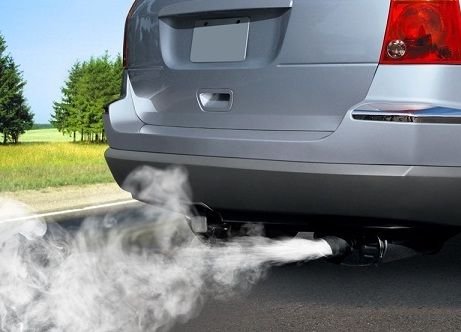
— Black or grey smoke from the exhaust
— Burning smell from the exhaust system
— Engine management light alongside DPF warning
Should you replace or clean DPF on a Peugeot Boxer?
Replacement should be the last resort — not the first suggestion. In the majority of cases, the Boxer’s DPF substrate is physically intact and fully cleanable. Professional DPF cleaning diesel service restores the filter to proper working condition without the cost and downtime of a full replacement.
Replacement is only necessary when the filter has physical cracks, melted from overheating, or carries heavy oil contamination with engine oil from an internal leak. A qualified DPF specialist will always inspect and test before recommending replacement.
For a working van, keeping DPF cleaning cost low is critical. A clean DPF service is always the sensible first step.
How does professional DPF cleaning work?
This is the question most Boxer owners ask once they’ve decided to clean DPF rather than replace it. Here’s exactly what happens:
- Full diagnostic scan — the technician reads fault codes, measures soot levels, and identifies the root cause. Sensor faults, injector issues or oil problems the diagnostic flags these before any cleaning starts.
- Forced regeneration — for moderate soot loading, a controlled forced regeneration burns off accumulated soot using specialist diagnostic equipment, without removing the filter.
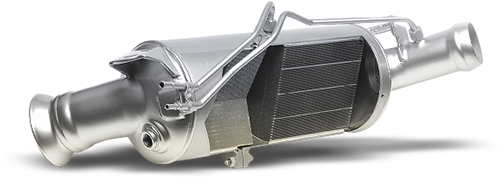
- Off-car ultrasonic cleaning — for heavily blocked filters, the DPF is removed and ultrasonically cleaned. High-frequency waves break down compacted ash and soot from the ceramic channels that regeneration cannot reach.
- Flow test before and after —the technician measures backpressure and compared before and after cleaning. You get the actual results — proof the filter is restored.
- ECU reset — the DPF soot counter is reset using specialist software. Without this, the warning light stays on and the van continues behaving as if the filter is blocked even after a successful clean.
Preventing DPF problems in your Peugeot Boxer
— Take a regular motorway run. Even 20–30 minutes at 60–70 mph once a fortnight gives the DPF the heat it needs for passive regeneration. Non-negotiable for vans doing local rounds.
— Never switch off mid-regeneration. If the van is showing a DPF warning and feels like it’s working harder than usual, it is regenerating. Let it finish.
— Check your wing mirror temperature sensor. This is a Boxer-specific tip — if the outside temperature reading on your dashboard is missing or incorrect, get it checked. It directly affects whether your DPF can regenerate.
— Use the correct engine oil. The Boxer requires a low-ash, low-SAPS oil. Using the wrong spec accelerates ash build-up inside the filter that professional cleaning alone cannot solve long term.
— Don’t ignore warning lights. DPF cleaning cost on a van caught early is always lower than the cost of dealing with limp mode, turbo damage, and downtime combined.
