
Nissan Qashqai DPF Cleaning | Problems, EGR Faults & How to Clean DPF

It is the UK’s favourite family SUV. Practical, affordable, comfortable, and absolutely everywhere. But spend any time on UK diesel owner forums and one name keeps coming up in DPF discussions more than almost any other — the Nissan Qashqai.
If you own a Qashqai diesel and you have never had a DPF problem, you are either lucky, doing lots of motorway miles, or the warning light has not come on yet. This guide covers what actually goes wrong with the Qashqai DPF, why it happens, and why professional DPF cleaning is almost always the right answer.
Why the Qashqai is a DPF problem waiting to happen
The Qashqai was designed and marketed as the perfect urban family car. Compact enough for city streets. Economical enough for family budgets. Raised enough to feel like an SUV without the running costs of one.
The problem is that everything that makes the Qashqai appealing to UK buyers is also everything that destroys a DPF. Diesel Qashqai models carry a serious DPF blockage risk if used mainly for short journeys — issues centre around DPF blockage and EGR valve fouling. Pistonheads
School runs. Supermarket trips. Town centre parking. Weekend family outings that never make it to the motorway. This is real Qashqai ownership for the majority of UK drivers — and it is exactly the kind of driving that prevents the DPF from ever reaching the temperature it needs to clean itself.
Doing lots of short journeys does not give the DPF a chance to regenerate, and that is why diesel engines need long journeys on a semi-regular basis. Most Qashqai owners never get those long journeys. The soot builds. The filter blocks. And the problems begin. Angel Tuning
The most common Nissan Qashqai DPF problems
1. DPF warning light that appears and disappears
his is the most reported early-stage issue and the one most Qashqai owners ignore. The DPF light comes on, the owner does a slightly longer drive, it goes off. They assume the problem is solved. It is not. An amber DPF warning light means the DPF is at risk of clogging and the driver needs to keep driving for a period of time — at least 20 or 30 minutes at speeds of more than 40 mph. If the root cause is short-journey driving and nothing changes, the light comes back. Each cycle loads the filter with a little more soot that did not fully burn off. Eventually the filter reaches the point where a motorway run cannot clear it. Angel Tuning
2. EGR valve fouling
EGR valve fouling is a known issue on Qashqai diesel models — a faulty or failed EGR valve causes excess diesel particulates to be produced, causing the DPF filter to block quicker. This is a critical point that most garages miss. Clean the DPF without checking the EGR valve and the filter blocks again in weeks. The EGR valve and DPF are connected problems — both need to be assessed before any cleaning work begins. Pistonheads
3. Limp mode on the school run
This is where things get serious for families. The Qashqai goes into limp mode — often with no warning beyond the DPF light that was ignored — and suddenly a car that was doing the school run is crawling at 30 mph and refusing to accelerate properly. For many owners this is the first moment they realise the DPF warning was not something they could safely ignore.
4. The 1.5 dCi and 1.6 dCi engine differences
Not all Qashqai diesels are equal when it comes to DPF risk. The 1.5 dCi is the bread-and-butter diesel, efficient in real-world driving, but with DPF blockage a serious risk if used mainly for short journeys. The more powerful diesel offering carries the same DPF and EGR concerns, arguably to a greater degree given its more complex variable geometry turbo setup. Owners of the higher-powered diesel Qashqai who do mostly urban driving face both a higher DPF cleaning cost risk and a more complex diagnosis when problems arise. Pistonheads
5. Buying a used Qashqai with unknown DPF history
This is a problem unique to used car buyers rather than original owners — but it affects thousands of UK drivers every year. With DPF filters not covered by warranty and with no way of instantly telling a car’s DPF history, it is very much buyer beware. A used Qashqai that looks clean and drives well on a short test drive can have a DPF that is 60–70% loaded with soot — perfectly functional today, blocked next month. Any used Qashqai diesel purchase should include a DPF diagnostic check before money changes hands. Just Answer
6. Turbocharger stress from prolonged DPF neglect
The Qashqai’s variable geometry turbocharger is already a precision component that requires careful maintenance. Add sustained exhaust backpressure from a partially blocked DPF and turbo wear accelerates significantly. Many Qashqai owners discover turbo issues in the same diagnostic session that reveals the DPF problem — by which point what should have been a straightforward DPF cleaning job has become a considerably larger repair.
What the dashboard is actually telling you
Qashqai owners often describe their dashboard warning sequence without realising what it means. Here is the translation:
— Slightly worse fuel economy than usual on familiar routes — earliest sign, almost always missed
— Amber DPF warning light — the filter needs a regeneration drive right now, not later
— DPF light returns shortly after a longer drive — the filter is now too loaded for passive regeneration to work, professional DPF cleaning needed
— Engine management light joins the DPF light — a sensor or component fault is involved, diagnostic required before cleaning
— Power loss on acceleration — soot loading is now affecting engine performance seriously
— Limp mode — the ECU has intervened to protect the engine, immediate professional attention needed
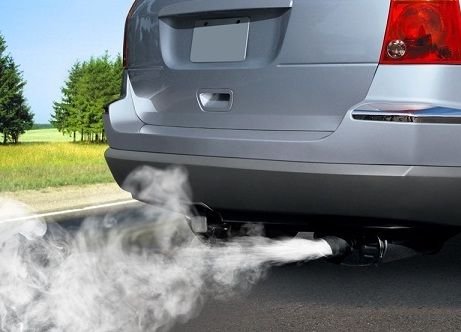
— White or black smoke from the exhaust — the filter has lost effectiveness, the car needs to come off the road for assessment
Clean DPF or replace — what Qashqai owners actually need
Nissan dealerships will sometimes quote for a new DPF without first establishing whether the existing one is cleanable. In the vast majority of cases, it is.
Professional DPF cleaning restores the filter to full working condition when the ceramic substrate is physically intact. The DPF cleaning cost is always significantly lower than a replacement unit. For a family car that needs to stay on the road, this is not just a financial consideration — it is a practical one.
Replacement is only appropriate when the substrate is physically cracked, melted from overheating, or contaminated with engine oil. A proper DPF cleaning specialist inspects and flow-tests before making any recommendation. If the filter is cleanable, they clean it. If it is not, they tell you why.
What never makes sense is replacing the DPF without diagnosing why it blocked — because on a Qashqai, the EGR valve and driving habits almost always play a role. Replace the filter without addressing those and the new one blocks in the same way.
How does professional DPF cleaning work?
This is a question Qashqai owners ask regularly — and it is worth answering properly, because there is a significant difference between a genuine professional service and a temporary fix.
Step 1 — Full diagnostic
The technician reads live data — not just fault codes. Soot percentage, backpressure readings, EGR valve function, temperature sensor values. On the Qashqai this step is essential, given how frequently the EGR valve is a contributing factor.
Step 2 — Forced regeneration
For moderate blockages, a controlled forced regeneration uses specialist diagnostic equipment to burn off soot accumulation at managed temperatures without removing the filter.
Step 3 — Off-car ultrasonic cleaning
For heavily blocked filters, the technician removes the DPF and performs ultrasonic cleaning. High-frequency sound waves break down compacted ash and soot from deep inside the ceramic channels — deposits that regeneration physically cannot remove.
Step 4 — Flow test verification
Backpressure is measured before and after cleaning. The results are documented — proof the filter has been restored, not just a verbal assurance.
Step 5 — ECU reset
The DPF soot counter is reset using specialist software. Without this, the Qashqai continues treating the filter as blocked even after a successful clean.
Keeping your Qashqai DPF healthy — practical advice
— A motorway run once a fortnight. 20–30 minutes at 60–70 mph on the M6, M5, or M42 gives the Qashqai DPF the sustained heat it needs. Non-negotiable for urban drivers.
— Never ignore the amber DPF light. Take it for a proper run that day — not next week.
— Get the EGR valve checked alongside any DPF cleaning. On the Qashqai these two problems are connected. Fixing one without checking the other is money wasted.
— Use the correct engine oil. The 1.5 dCi and 1.6 dCi both require low-SAPS specification oil. Wrong oil accelerates ash deposits that cleaning cannot fully reverse long term.
— If buying used, always request a DPF diagnostic before purchase. A clean-looking Qashqai with an unknown DPF history is a gamble not worth taking.